
Metrolab THM1176/TFM1186 USB Teslameter
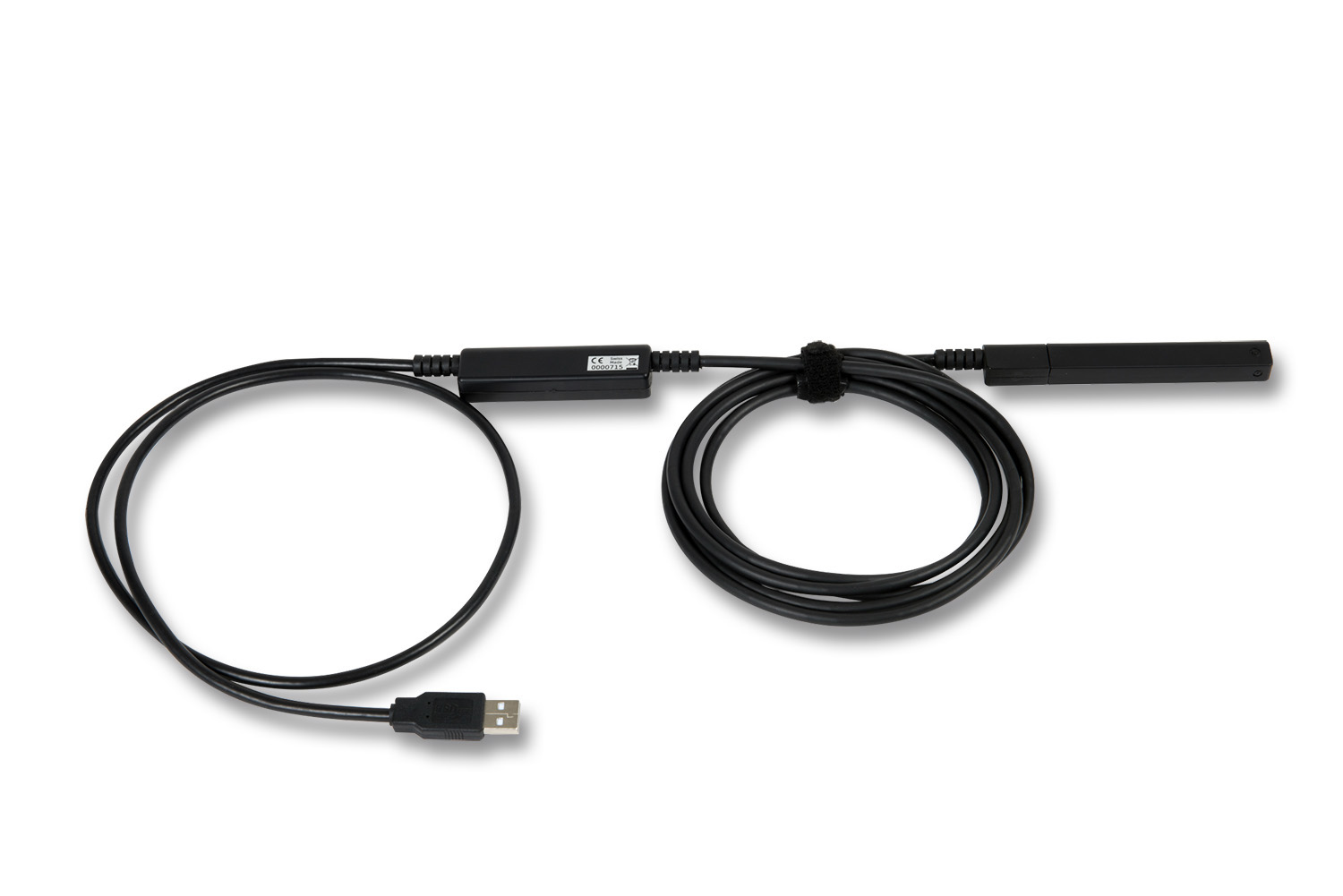


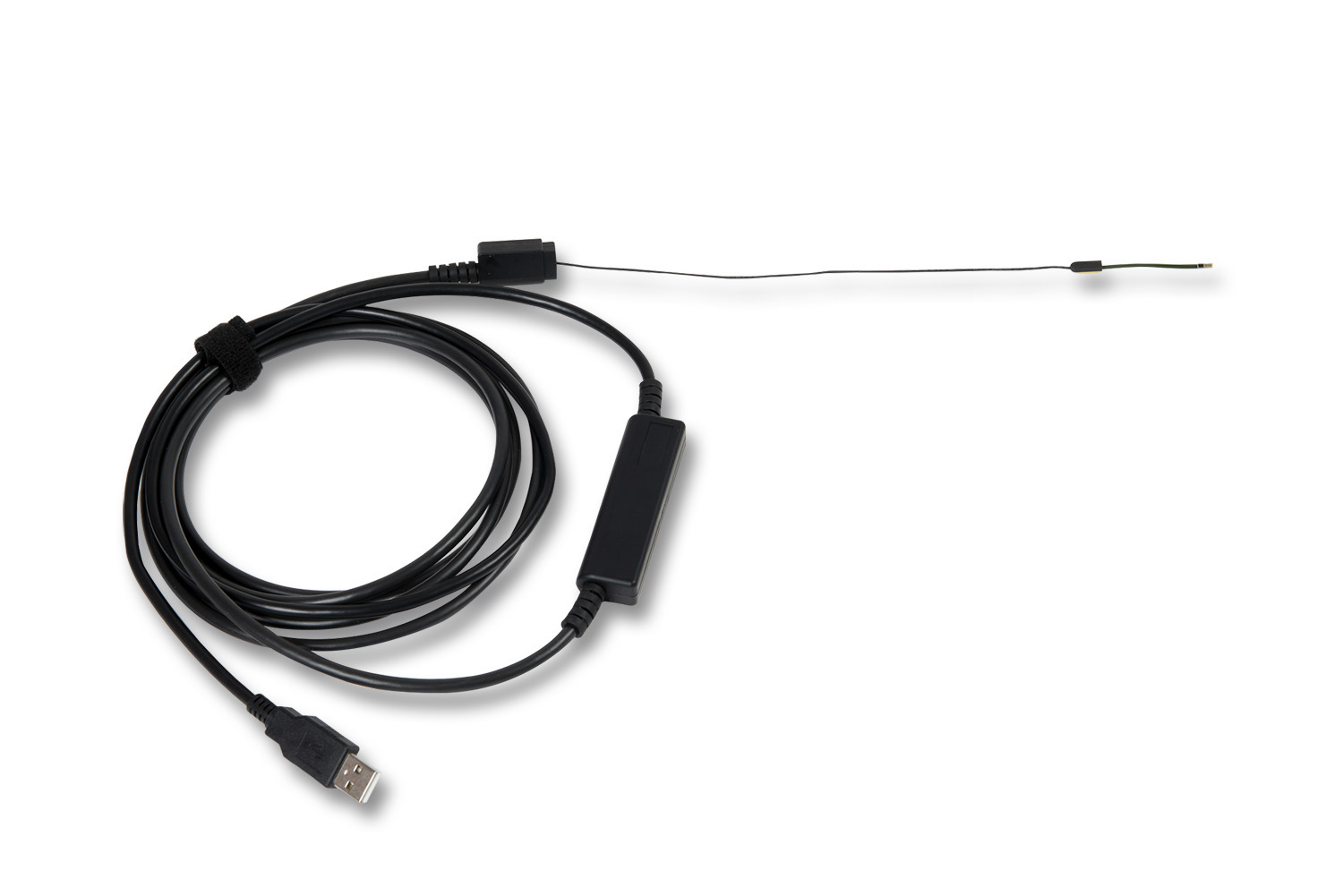

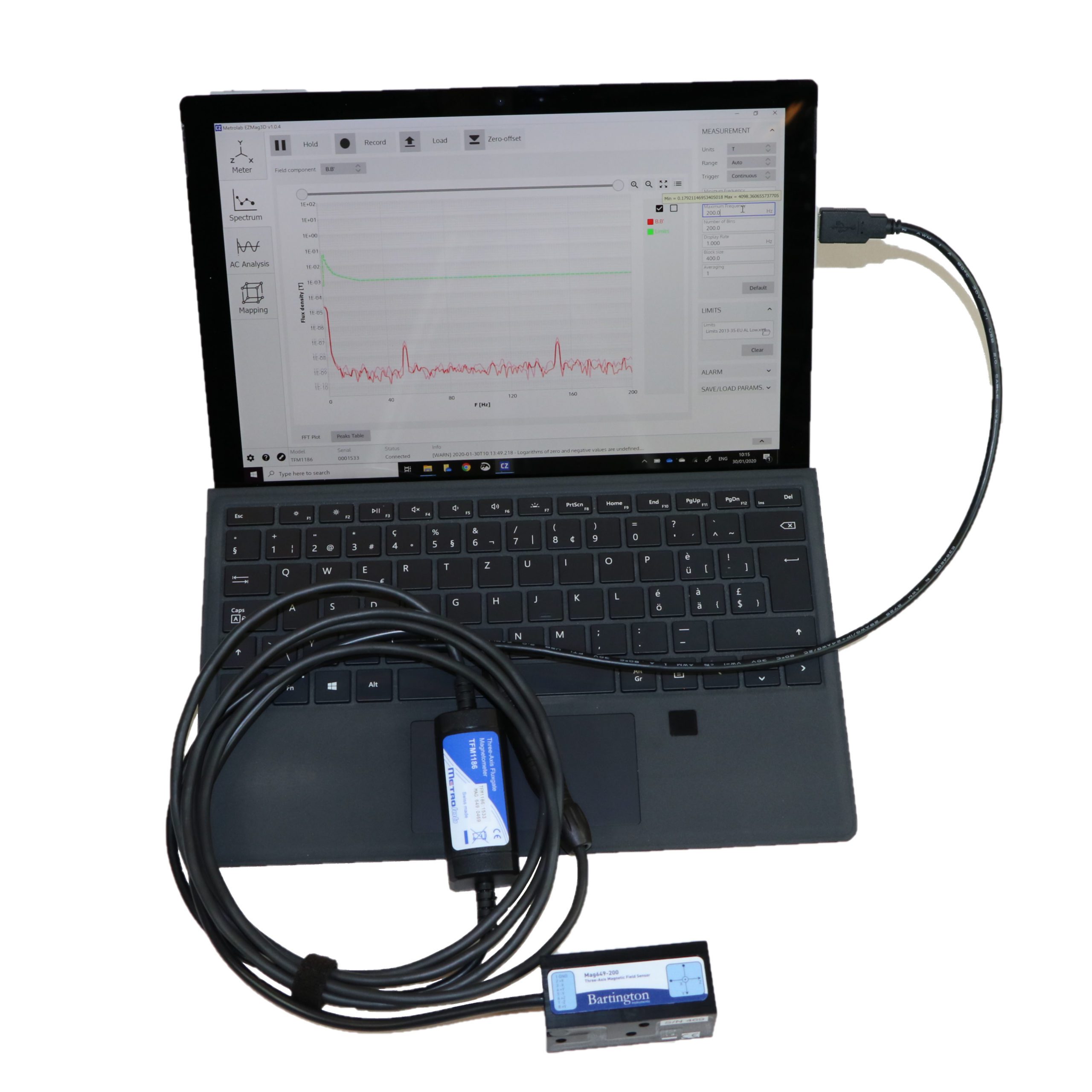
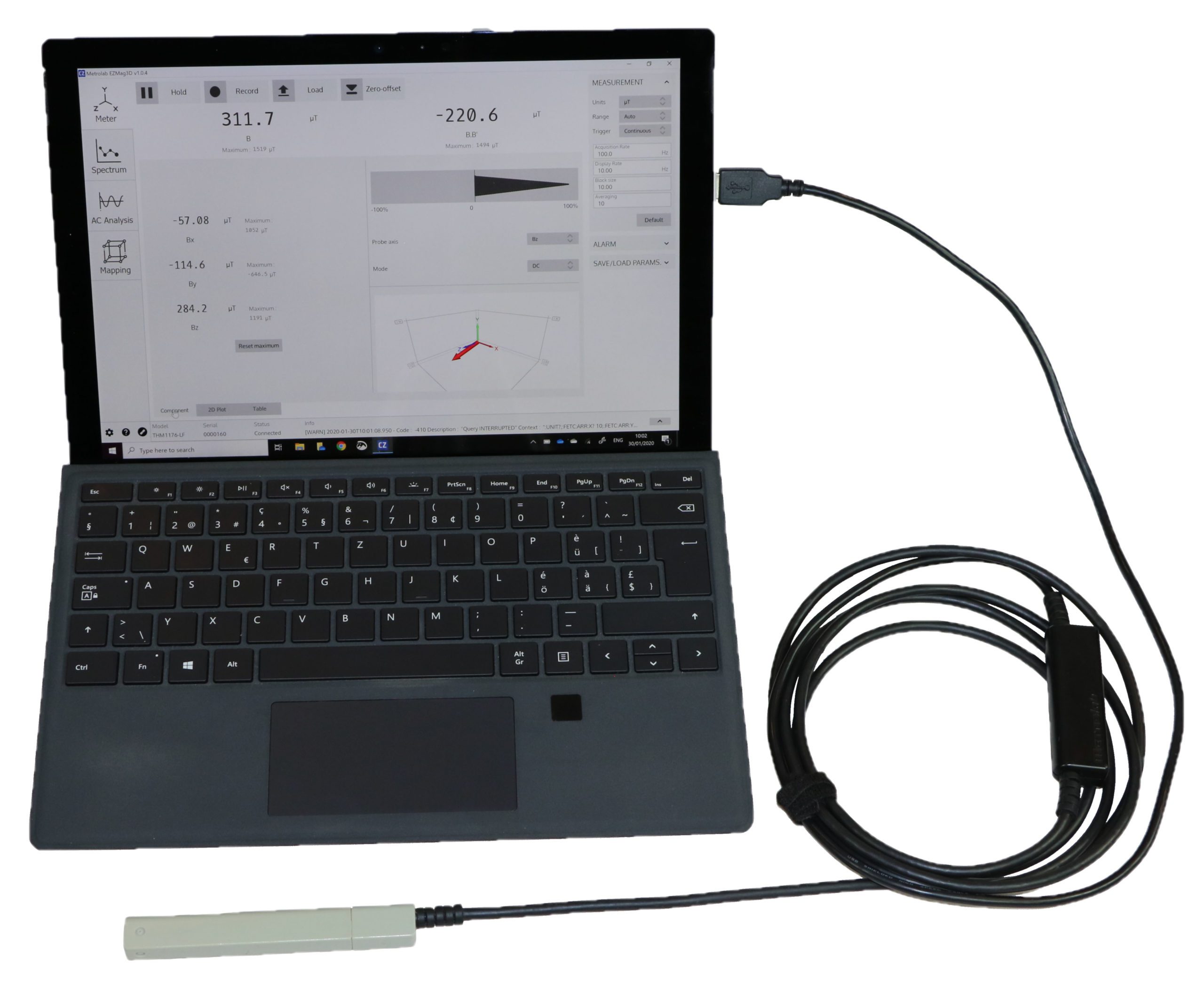
The Metrolab THM1176 and TFM1186 are unique three-axis Magnetic Field Probes with USB Interface and power via the interface.
Fields from nT to 20 T, DC to 1kHz, can be measured with ±1% accuracy. All three axes of the magnetic field are simultaneously measured to give an accurate total field amplitude independent of Probe orientation. The entire instrument has been reduced to a cable that can plug directly into the USB port on your PC or battery-powered handheld computer.
The THM1176 and TFM1186 are available in two configurations:
Three-axis Magnetic Field Probe with USB Interface:
Utilizes a USB connector to connect to the Hall or Fluxgate probe to a computer with the supplied software that displays the total field and the components, numerically or graphically, records and plays back measurements, and allows you to scan a volume to find the maximum field value.
PC Software is compatability with Windows 7, Vista, XP, Server 2008 and Mac OS X.
Three-axis Magnetic Field Probe with USB Interface and Tablet:
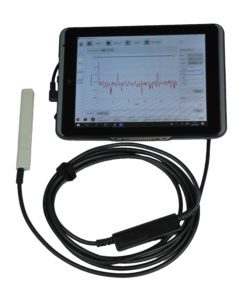
Industrial quality handheld computer allows you to take the Teslameter (Gaussmeter) anywhere you need. A heavy-duty battery, plus a spare, provides an autonomy of nearly a full working day. The AC adaptor comes with plugs for Europe, UK, USA and Australia. The software has the same functionality as on the desktop computer; source code is included. It all comes in a convenient, padded carrying case..
Common applications include: Testing of medical devices and monitors for MRI compatibility. Safety control in an MRI environment e.g. 5 Gauss line mapping, permanent magnet QC, mapping of magnet fringing field contours, evaluating magnetic shielding effectivenes, magnetic remanence mapping, magnetic particle inspection waveforms, compliance with IATA regulations for magnet shipments.
Tech Support
- New THM1176 and TFM1186 software EZMag3D via metrolab.com
- Troubleshooting – THM1176 Software: Problems and Solutions? via Metrolab
- THM1176: Typical Application Scenarios via Metrolab
- Tech Note – Can I use the THM1176-HF as a thermometer?
- Occupational Magnetic Fields – Guidelines for DC Fields
- Magnetic Field Vectors and Components
- THM1176 -MF and -HF Sensor Head Dimensions
- Troubleshooting: Why am I getting “Unable to locate LabVIEW runtime” error?
- Can I use TM1176 as a thermometor via Metrolab
- Troubleshooting – PDA battery discharge problems via Metrolab
- Installing THM1176 Software on Windows 8 and Windows 10 via Metrolab
- Evaluation of exposure to (ultra) high static magnetic fields during activities around human MRI scanners (researchgate.net)
Pricing
Three-axis Magnetic Field Probe with USB Interface
| Part No. | Description | Price | In Stock |
|---|---|---|---|
| TFM1186-PC | Three-axis Fluxgate Probe with USB Interface: | $8,240.00 | |
| THM1176-LF-PC | Three-axis Low-field Hall Probe with USB Interface: | $5,470.00 | |
| THM1176-MF-PC | Three-axis Medium-field Hall Probe with USB Interface: | $6,630.00 | |
All Magnetic Field Probes Include:
| Ask |
Options and Accessories
| Part No. | Description | Price | In Stock |
|---|---|---|---|
| THM-G0830-PDA | Tablet and carrying case for THM1176/TFM1186 desktop kit includes:
| $2,110.00 | |
| THM1176-DUO | Discount for a combination of any two different 3-axis probes: $2,070. | Ask | |
| 3076-6M | 6 meter cable length option for the 3-Axis Hall Probe | $100.00 | |
| FLEX10B | Tablet Computer, Windows 10 Professional, 10” Touch-screen Display, 4GB RAM, 128GB Storage. Fully rugged case for MIL-STD 810G, 4 Feet Drop / Shock Test | $900.00 | |
| FLEX-KYBRD-KIT | Keyboard for FLEX10B Tablet Computer | $100.00 | |
| EZMag3D-INSTALL | Installation and Test of EZMag3D for THM1176/TFM1186 | $250.00 |
Calibration – THM1176, TFM1186, THM7025 and ETM-1 USB/Hand-held Teslameter/Gaussmeter
| Part No. | Description | Price | In Stock |
|---|---|---|---|
| TFM1186-CAL | Calibration of TFM1186 | $1,890.00 | |
| THM1176-HF-CAL | Calibration of THM1176-HF to ±14T in 20T Range. | Ask | |
| THM1176-LF-CAL | Calibration of THM1176-LF. | $950.00 | |
| THM1176-MF-IN-CAL | Calibration of THM1176-MF within calibration period. | $950.00 | |
| THM1176-MF-OUT-CAL | Calibration of THM1176-MF outside calibration period. | $1,890.00 | |
| THM7025-CAL | Calibration of THM7025 or ETM-1. | $950.00 |
| Quantity Discount Schedule: | ||||
|---|---|---|---|---|
| Quantity | 1 – 4 | 5 – 9 | 10 – 19 | 20 + |
| Discount | 0% | 5% | 10% | Contact GMW |
Terms and Conditions
Terms and Conditions:
Prices above are for domestic deliveries to Canada, USA and Mexico only.
For deliveries in all other countries please contact Metrolab.
Prices are expressed in U.S. Dollars, FCA San Carlos, California.
Prices are subject to change without notice.
OEM discounts are available.
Payment:
Visa, MasterCard, Amex, Prepayment before shipment, or Net 30 days (subject to credit acceptance).
Delivery:
Stock to 60 days, depending on quantity.